---
title: Workshop Your Team Has 12 Tech Ideas. You Have Budget for 2. Now What?
description: Free workshop for wholesale distributors $15M–$160M. Learn the 4P Framework to prioritize tech investments and identify $150K–$500K in improvement opportunities.
image: https://info.intuilize.com/hubfs/2026%20Files/Intuilize%20%3C%3E%20Boltwise%20Workshop%2005.2026/202605%20Intuilize%20%20Boltwise%20Workshop%20Banner%20%20(1280%20x%20400%20px).png
---
[](https://intuilize.com/)
© 2026 Intuilize, Inc. All rights reserved.
.png?width=1280&name=202605%20Intuilize%20%20Boltwise%20Workshop%20Banner%20%20WATCH%20NOW%20(1280%20x%20400%20px).png "202605 Intuilize Boltwise Workshop Banner WATCH NOW (1280 x 400 px)")
**🎁 Free**
**⏱ 70 Min Workshop**
Most distributors don't have a prioritization problem. They have too many legitimate problems and not enough clarity on which one to solve first.
In this working session, Nelson Valderrama (Intuilize) and Cole Weiler (BoltWise) walk through the 4P Framework — a structured approach to identifying your highest-impact technology and operational projects, quantifying the business case behind each one, and building a pitch your leadership team can act on.
| .png?width=50&height=50&name=check%20(1).png) | **What You'll Walk Away With:** A repeatable method to translate operational symptoms into structured problem statements your CFO can evaluate |
| --- | --- |
---
| .png?width=50&height=50&name=check%20(1).png) | **A tool to gather evidence and quantify the financial impact of your problems** — before you pitch anything |
| --- | --- |
---
| .png?width=50&height=50&name=check%20(1).png) | **A preview of the 2x2 priority matrix used by distributors** to cut project evaluation time from months to weeks |
| --- | --- |
| .png?width=124&height=124&name=email%20(1).png) | **The 4P Framework** If you want the working files — the same scoring sheets and templates used live during the workshop — fill out the short form and we'll send them to you directly. |
| --- | --- |
## Frequently Asked Questions
#### Q1. What is the 4P Framework?
It's a structured process for identifying, quantifying, and prioritizing technology and operational improvement projects in your distribution business. The four steps are: Preparation (scoring 31 common distributor projects), Problems (turning symptoms into problem statements), Proof (building a quantified business case), and Priority (plotting projects on an impact vs. complexity matrix so you know where to focus first).
#### Q2. Who is this for?
Mid-market distributors — owners, operations leads, pricing managers, sourcing teams, or anyone responsible for making the case for a technology or process investment internally. The framework works whether you're the decision maker or the internal champion trying to get a project funded.
#### Q3. Do I need to be a finance expert to use it?
No. The goal is not a precise financial model — it's a defensible estimate with a range. The workshop walks through how to use conservative, moderate, and aggressive bands so you can present leadership with options rather than a single number you can't defend.
#### Q4. What if I don't know the complexity of a project?
That's expected — and the workshop addresses it directly. If you don't know the complexity, you flag it, do some research, or bring in someone who does. The point of the exercise is to expose those gaps before you're standing in front of your leadership team.
#### Q5. We already have a gut feel for our top projects. Is this still useful?
Yes — and this came up in the session. Most distributors do already know what their top priorities are. The framework gives you the structured business case to back it up, and more importantly, it gets your whole team aligned on *why* other projects aren't moving forward. That organizational clarity is often more valuable than the prioritization itself.
#### Q6. What if one of the 31 projects doesn't apply to us — or we have a project that isn't on the list?
Skip what doesn't apply (mark it zero). And if you have a project not on the list, add it. The 31 projects are a starting point, not a constraint.
#### Q7. Should we do this as a team or individually?
Both approaches work, but doing it as a team produces better results. Different functions — sales, finance, operations, warehouse — will have completely different symptoms for the same underlying problem. Getting those perspectives in the room before you build your pitch prevents conflicts later.
#### Q8. How long does it actually take to complete?
The prep scoring (all 31 projects) should take no more than 30 minutes if you move quickly — the goal is directional, not precise. The problem statement and proof steps take longer depending on how deep you go. The full framework can be done in a focused half-day working session with your team.
#### Q9. What's the output at the end?
A one-page pitch you can take to your owner or leadership team — with a clear problem statement, quantified opportunity (conservative to aggressive range), impact and complexity scores, risk factors, and a recommended next step.
.png?width=60&height=60&name=quote%20(1).png "quote (1)")
## "Distributors from $15M to $160M have used this framework to identify $150K–$500K in annual improvement opportunities and cut project evaluation time from months to weeks."
[](https://info.intuilize.com/hs/cta/wi/redirect?encryptedPayload=AVxigLIllSelUoxvZys04EGH6f9mKQCs3%2BZugiqTAlDTKMx3UoNSD4vl5g6pkvL7tyGQWsq9ud%2BsxJQKCdwhRv7bJthAYIlkh8imL35M2W0nha%2BF%2Bt13Z9Bfs%2F02h7i43DNWQtmg7yyycJu13z%2BJytMstPhVUoCGlZAV61QHqqT0KiiY09HyqagQ4S69y5R2F6C0ONpDEDjRnBft1FMi4Peybw%3D%3D&webInteractiveContentId=218224207924&portalId=21377494)
Speakers
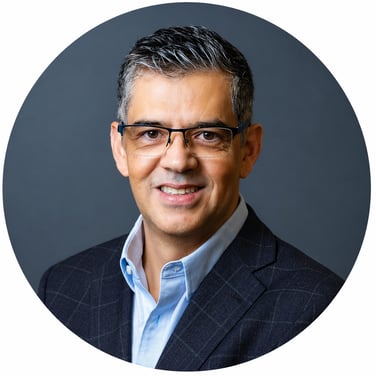
**Nelson Valderrama**
CEO & Founder | [Intuilize, Inc.](https://www.intuilize.com/)
Nelson Valderrama is the Founder and CEO of Intuilize, where he leads a team dedicated to helping industrial distributors unlock their hidden potential through data-driven decision making. With over 30 years of experience in the distribution and wholesaling industry, including work with GE and Private Equity firms, Nelson identified that distributors were sitting on wealth of untapped data.
Through Intuilize's AI-powered solutions that focus on the two main levers of profitability—pricing and inventory optimization—Nelson helps mid-sized distributors transform their operations, preserve institutional knowledge, and achieve sustainable growth without adding headcount or complexity.

Cole Weiler
CEO & Co-Founder | [Boltwise](https://getboltwise.com/)
Cole Weiler is the founder and CEO of BoltWise, a company building AI-powered software to automate how industrial distributors quote, source, and sell parts. BoltWise focuses on applying modern AI and search technology to industrial distribution, helping companies handle complex part identification, catalog data, and sourcing workflows that have historically been manual and fragmented.
Before founding BoltWise, Cole worked at McKinsey & Company in procurement, serving aerospace, automotive, and heavy industrial companies. That experience exposed him to the inefficiencies of sourcing and quoting industrial components at scale and ultimately led him to start BoltWise.
© 2026 Intuilize, Inc. All rights reserved. [Privacy Policy.](https://intuilize.com/privacy-policy/) [Terms of Use.](https://intuilize.com/terms-of-use/)